 Concert
Belle Époque
About
Automatically translated. Read the original French text.
Program:
Concert for piano, violin and string quartet, Ernest Chausson
Sonata for piano and violin, César Franck
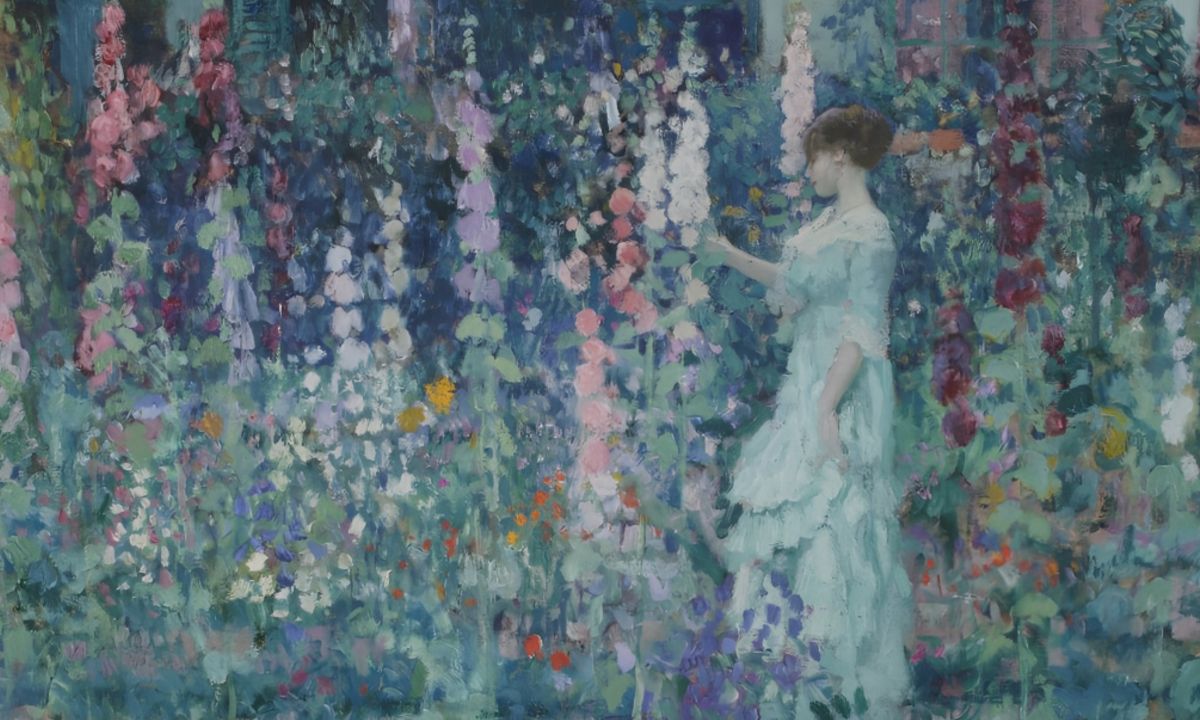
At the turn of the twentieth century, the "Belle Époque" was marked by scientific innovations and an exceptional artistic and cultural blossoming: it also corresponded to one of the most flourishing periods of French musical life. Among the many figures flourishing during this time, that of violinist and composer Eugène Ysaÿe (1858-1931) particularly stands out: an immense violinist, virtuoso, but also a dedicated educator and performer, he maintained close ties with the composers of his time (Franck, Chausson, Debussy, Fauré, Saint-Saëns…), contributing to the emergence of an extraordinary repertoire. César Franck's Sonata for violin and piano, dedicated to Ysaÿe on the occasion of his wedding in 1886, and Ernest Chausson's Concert, composed between 1889 and 1891 and premiered by the violinist in 1892, bear witness to this fruitful relationship: through their cyclical writing, their chromaticism and the breadth of their lyrical discourse, these two works particularly illustrate César Franck's art, as well as his influence on the younger generation: a path enthusiastically taken by the young Ernest Chausson, an admirer of Wagner and himself a student of Franck at the Conservatory.
"Below the narrow line of the violin, slender, resilient, dense and commanding, he had suddenly seen seeking to rise in a liquid lapping, the mass of the piano part, multiform, indivisible, smooth and clashing like the mauve churning of the waves that the moonlight charms and flats." This is how Proust portrays the mysterious "Vinteuil Sonata", a (fictional) composer of genius whose music haunts the narrator in In Search of Lost Time. This work actually corresponds to Franck's sonata, whose theme of such peculiar charm continuously returns under new guises throughout the four movements, offering the piano an impressive score in which the composer-organist deploys the full range of his registers.
While Franck's Sonata (perhaps buoyed by its Proustian fame) established itself as "the" model of the sonata for violin and piano, Chausson's Concert, by contrast, is a work with a unique instrumentation, a magnificently successful exception. Facing the solo violin, the piano, endowed with a virtuosic part, is a true "orchestra" answered by a third player, the string quartet. A full-fledged actor, the quartet comments on the action like an ancient chorus before plunging into it in turn: the colors brought by these instrumental combinations create a sound palette of marvelous delicacy. But the most moving moments are certainly those where all these instruments merge into a grandiose and poignant ensemble.
Performers:
Pauline Klaus, violin
Marc-Olivier de Nattes, violin
Frédérique Rouzeau, violin
Loïc Abdelfettah, viola
Samuel Etienne, viola
Kazuko Hiyama, piano
Practical info
Full venue programme →