
 Festival
Le Giornate del Cinema Muto, sélection du festival de Pordenone 2026
About
Automatically translated. Read the original French text.
People often wonder if, after forty-five editions, the Giornate del Cinema Muto have already screened most silent films worthy of being seen. The answer is a categorical "no". There is still so much to discover, as this year's selection proves.
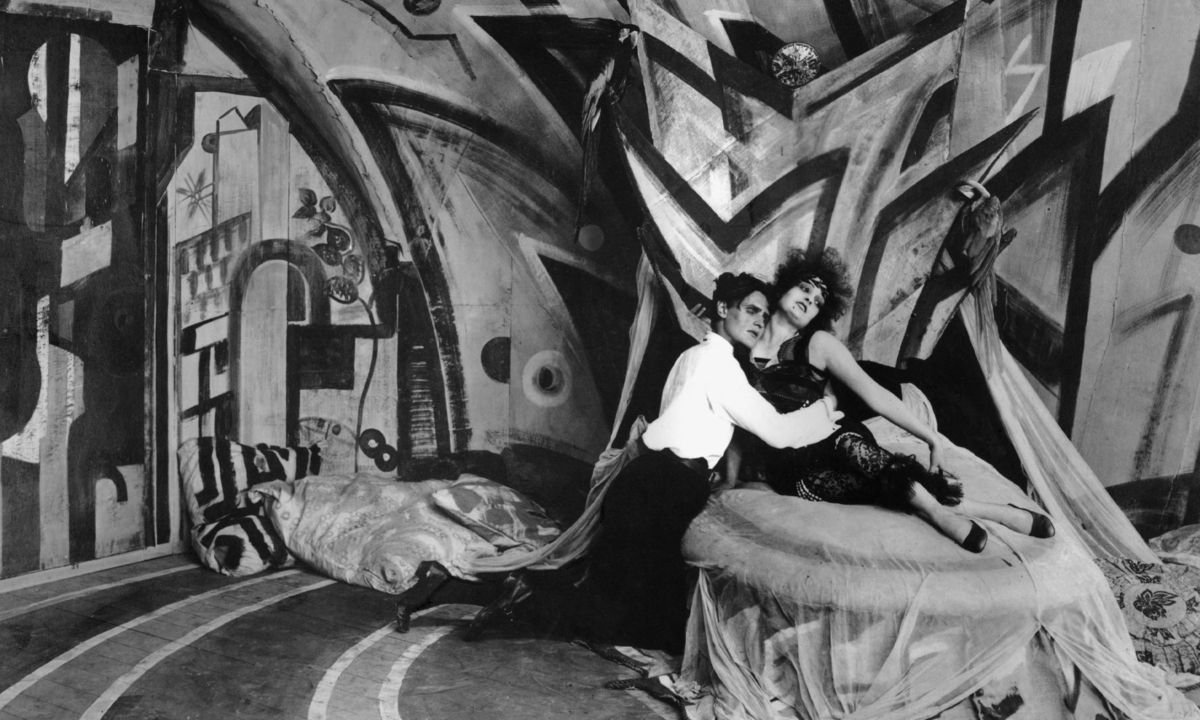
We think we know Weimar cinema well, but that certainty proves unfounded as soon as one delves into one of this year's most significant sections: "Weimar without censorship. Taboos and transgressions in German cinema, 1919-1920". In Die Teufelskirche, a sensual woman sells her soul to the devil to bear a child, while a pastor's desire for a new church blinds him to the consequences of his alliance with evil. The plot of Heddas Rache is even more surprising: it features a young woman seeking revenge on the man who forced her mother into prostitution. This section is complemented by the new restoration, carried out by the Munich Filmmuseum, of Robert Wiene's Genuine, an expressionist reverie in which Fern Andra, playing a lustful vampire, thirsts for the blood of attractive men.
We continue the series launched last year dedicated to Italian diva Italia Almirante Manzini with two new titles: La grande passione (1922), a story of romantic rivalry magnificently performed, and the blockbuster L’arzigogolo (1924), released in France under the title La belle dame sans pitié. Still in Italy, we are screening two films produced by Film d’Arte italiana: Stellina, la pêcheuse de Venise (1912), with magnificent stencil-applied colors, and Il Romanzo di Maddalena (1913), shot amidst the monuments of Rome. Outdoor location shooting also plays a key role in the German-Italian co-production Villa Falconieri (1928), directed by Richard Oswald.
Heading North, Gyurkovicsarna (1920) is a charming Swedish adaptation of a Hungarian novel, directed by John A. Brunius and starring his wife Pauline Brunius, who also co-wrote the screenplay with famous actor Gösta Ekman.
Gloria Swanson called American director Marshall Neilan "the most fascinating man in Hollywood", but he was much more than that: an excellent director, beloved by his actors and crew. We screen two rarities: The Girl at Home (1917), starring Jack Pickford, and Diplomacy (1926), adapted from Victorien Sardou's play Dora and starring Neilan's wife, Blanche Sweet.
Franco-American relations occupy a central place in the splendid new restoration, carried out by the Cinémathèque française, of Léonce Perret's film N’oublions jamais !, in which Rita Jolivet relives her poignant experience aboard the Lusitania. Another great diva – Pola Negri – is honored with a film fragment from 1920, otherwise lost: Die Marchesa d’Armiani, highlighting the star's feline grace and physical presence.
Finally, with Don Q, son of Zorro (1925), we relish the sheer joy of swashbuckling adventures embodied by Douglas Fairbanks at the peak of his energy, thanks to a dazzling restoration by the Danske Filminstitutet.
Practical info
Full venue programme →