Louvre Photo
Musée du Louvre et jardin des Tuileries — Place du carrousel, 75001 Paris, France
- AccessibilityReduced mobility
About
Automatically translated. Read the original French text.
The opening of the Louvre in 1793 preceded the birth of photography by several decades. The museum, which blends the real and the imaginary and allows travel through time and space, was a fertile cradle of inspiration for the early inventors of photography.
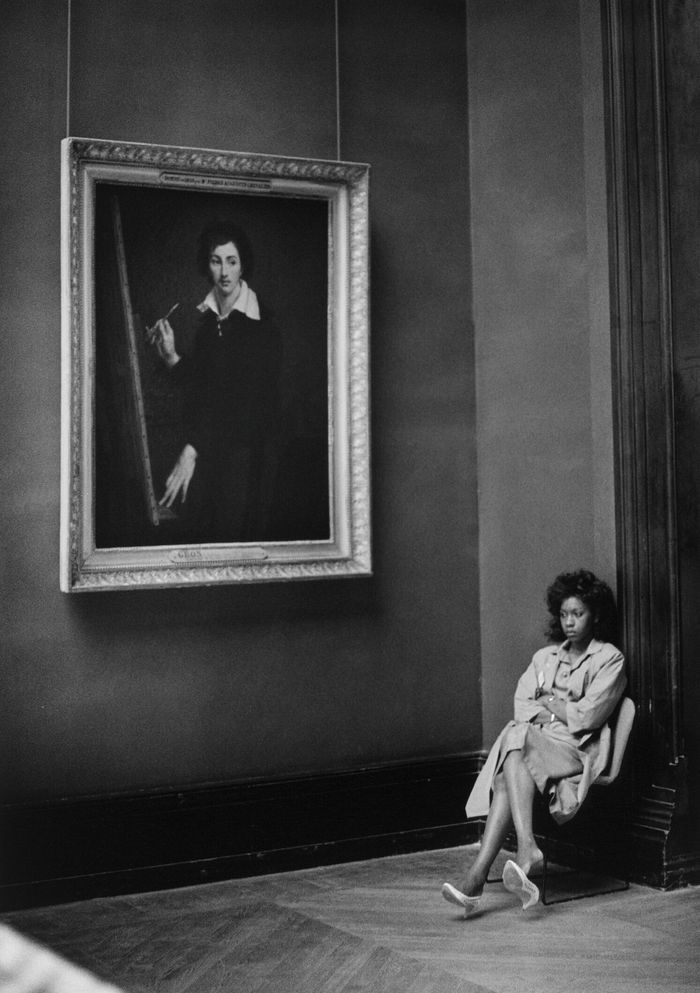
The project of this unprecedented exhibition focuses on the Louvre as model, subject, source of inspiration, and object of artistic détournement. It will present photographs taken at the Louvre as well as photographs of the Louvre, its artworks, exhibition galleries, open spaces, but also famous and anonymous visitors, museum staff, hidden places, and behind the scenes.
Several projects to create a Museum of Photography at the Louvre were considered starting in the 1850s, but remained without follow-up.
Early photographers understood the potential of this new technology that allowed them to represent artworks and prove their virtuosity, thereby gaining recognition for photography as an art form in its own right. Several of them, like Charles Marville, sought to become the official photographer of the Louvre. It was not until 1883 that a commercial agreement was signed between the Louvre and the firm Ad. Braun et Cie, already famous for its numerous reproductions of artworks.
The Louvre very quickly became a photographic subject and motif. Its architecture, spaces, collections, and gardens were represented, reproduced, showcased, and repurposed from the very first decades of the invention. They thus form a shared photographic reality and imagination, where popular culture embraces the museum, sometimes superimposing itself onto established knowledge.
Photographing at the Louvre, photographing the Louvre
Louvre Photo will cover the long period that elapsed from the invention of photography until now, from the first photographers to those invited today by the museum, like Robert Polidori recently.
This period was marked by major historical events such as the Commune, the First and Second World Wars, and the diplomatic and tourist boom of the Trente Glorieuses. It was also punctuated by key moments in the museum's history, such as the transformation of the palace into a museum under the Second Empire, the evacuation and return of works during the two world wars, and the creation of the Grand Louvre in the 1980s.
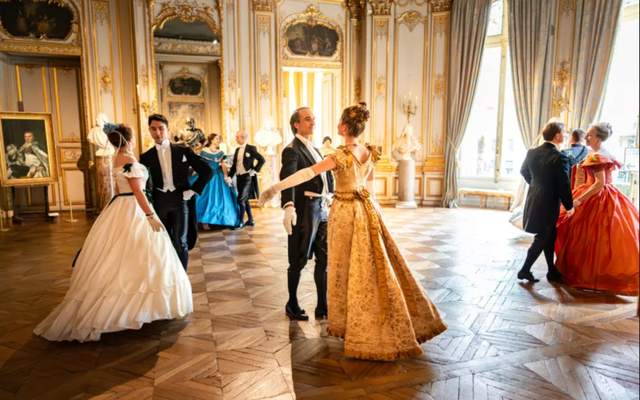
It will also evoke the presence within the Louvre of celebrities of their time, festive and social events, fashion shows, and film shoots.
By taking place within a unified setting – delimited by the building's walls and garden railings, notably the Tuileries –, the exhibition will bring together all photographic techniques, from daguerreotypes to digital images. It will strive to display artists' prints alongside reproduction materials, projections, slides, and postcards. Its layout will follow a thematic approach, served by specific scenography alternating viewing angles and modes of perception.
Louvre Photo will highlight the photographic holdings preserved at the Louvre across the various collection departments, documentary archives that remain active, as well as collections from French institutions, including the Archives nationales, the Médiathèque de la Photographie et du Patrimoine, the Bibliothèque nationale de France, the Musée d'Orsay, the Musée Carnavalet, and the Bibliothèque historique de la Ville de Paris.
The exhibition will showcase commissions given to photographers by the Louvre since the early 2000s. It will be accompanied by an original publication, innovative in form and concept, published by the Louvre and Éditions La Martinière, designed by the young creators of Atelier Pierre/Pierre.
A study day will be organized by the Louvre and the Centre allemand d’histoire de l’art at the end of January 2027, exploring photography in museums, models and counter-models.
Visitors and museum staff will be invited throughout the exhibition to submit their photographs of the Louvre (buildings, collections, galleries, backstage). The exhibition will feature a program of activities and mediation at the Studio.
Louvre Photo will invite discovery and revelation, encouraging renewed, distanced perspectives, sometimes not without humor or quirkiness, on the museum, the institution, and its collections.
Curatorship
Dominique de Font-Réaulx, general curator, project officer reporting to the President-Director of the Musée du Louvre, and Quentin Bajac, director of the Jeu de Paume.
Scenography by Juan-Felipe Alarcon and graphic design by Atelier Pierre/Pierre.
Catalogue
Under the direction of Dominique de Font-Réaulx and Quentin Bajac (Françoise Mardrus, Éléonore Challine, Marie-Ève Bouillon). Design Atelier Pierre/Pierre. 248 pages, 35 €. Co-published by Musée du Louvre / La Martinière. Published on 23 October 2026.
Where to book
Getting there
DirectionsMusée du Louvre et jardin des Tuileries
Place du carrousel, 75001 Paris, France, Paris
- M1M7Palais Royal - Musée Du Louvre3 min walk
- M1Louvre Rivoli8 min walk
Stations: Île-de-France Mobilités
Full venue programme →Sources : OpenAgenda · details last read on 14 November 2026