 Exhibition
Pompompom Pommes !
About
Automatically translated. Read the original French text.
What is it about?
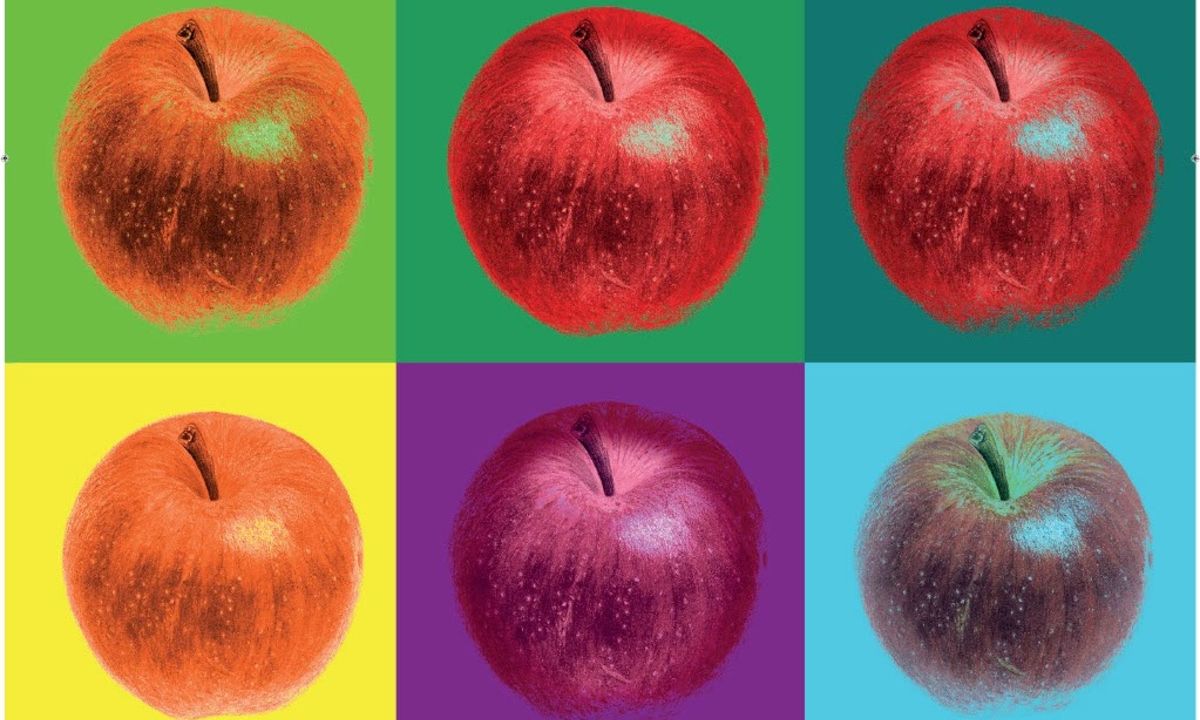
For more than a month, this exhibition invites you into the fascinating world of a familiar fruit we think we know inside out. Behind the apple eaten as a snack or dessert lies a rich world: a botanical history, exceptional horticultural diversity, surprising shapes and colours, countless uses and a whole heritage to savour.
The editorial team’s view
To reach the exhibition, visitors first follow a nature trail that sets the scene: into the bois de Boulogne (16th arrondissement), then the charming Parc de Bagatelle, and finally the Orangerie, a white building with enormous wooden doors. Inside the large hall, apples are everywhere, in works of art, colourful explanatory panels and even in the flesh, as the fruit is examined from every angle.
What catches the eye first? Huge wooden apples humorously decorated by inspired artists such as Katia de Conti. Visitors then discover, with surprise, fruit from wild apple trees and other natural varieties from around the world: they are the size of a raspberry or a cherry and apparently taste very sour!
A feast for the eyes, the exhibition is also a fascinating learning experience. Its panels explain the fruit’s origins in Europe and, above all, in Kazakhstan, a country whose mountain valleys have been covered with apple trees since prehistoric times. The Kazakh species Malus sieversii, whose seeds people carried from Central Asia to Europe thousands of years ago, gave rise to our first domesticated apple tree.
The exhibition traces this very long history of people selecting trees that resist disease and pests and produce the best fruit. Long based on experience and observation, this work has become a rigorous science under the direction of the Institut national de recherche pour l’agriculture, l’alimentation et l’environnement (INRAE). The strength of this inspired journey into the world of apples? Satisfying both the senses and the mind!
Contributors: the Société nationale d’horticulture de France (SNHF), the Conservatoire des collections végétales spécialisées (CCVS), the association Potagers de France, the Jardin botanique d’Almaty (Kazakhstan), Partage (a Geneva foundation working on food recycling), Novadi (apple breeder), the Institut national des productions cidricoles (IFPC); l’École du Breuil (landscape art and techniques), the association Les Croqueurs de pommes, the Potager du Roi, les amis du Potager du Roi, the Pépinières Chatelain, the Centre national de la recherche scientifique (CNRS) / Tamos and GQE research units, AgroParisTech and l’université Paris-Saclay.
An exhibition jointly organised by the Institut national de recherche pour l’agriculture, l’alimentation et l’environnement (INRAE) and the direction des Espaces verts et de l’Environnement (DEVE) of the Ville de Paris — Jardin botanique de Paris.
Practical info
Ends in 5 days
Full venue programme →