 Other
Voir Tahiti. Premières photographies 1859-1870
About
Automatically translated. Read the original French text.
Exhibition Voir Tahiti. Premières photographies 1859-1870
From September 29, 2026 to January 31, 2027
The museum acquired in 2023 an exceptional collection of photographs that are the very first taken in French Polynesia, between 1859 and 1870, by two naval officers.
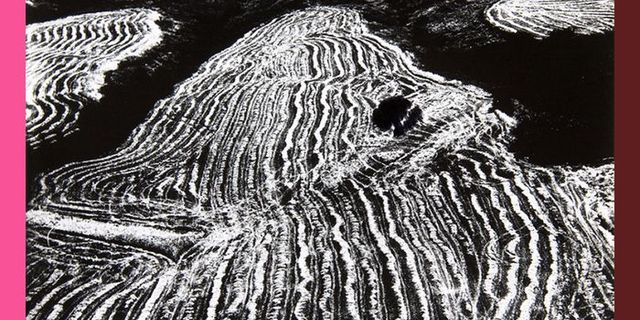
All photographs taken by Gustave Viaud between 1859 and 1862 consist of paper negatives sometimes accompanied by their salted paper prints. It was acquired from the Loti-Viaud family in the 1990s. Kept ever since by the same collector, these images have never been exhibited. Gustave Viaud was the older brother of Julien Viaud, known as Pierre Loti. Gustave Viaud was a key figure in the writer's passion for exoticism. He was above all an unrecognized figure in early photography. A naval surgeon stationed in Tahiti in June 1859, he quickly acquired photographic equipment to experiment with this new mode of representation. He used paper negatives, as did Pierre Trémaux in Sudan, Auguste Bartholdi and John Beasley Greene in Egypt, or Désiré Charnay in Mexico during the same years. His images, mostly landscapes, show mastered compositions, sometimes playing with the movement of plants in the wind. He also produced an exceptional portrait of Teriimaevarua II, Queen of Bora Bora.
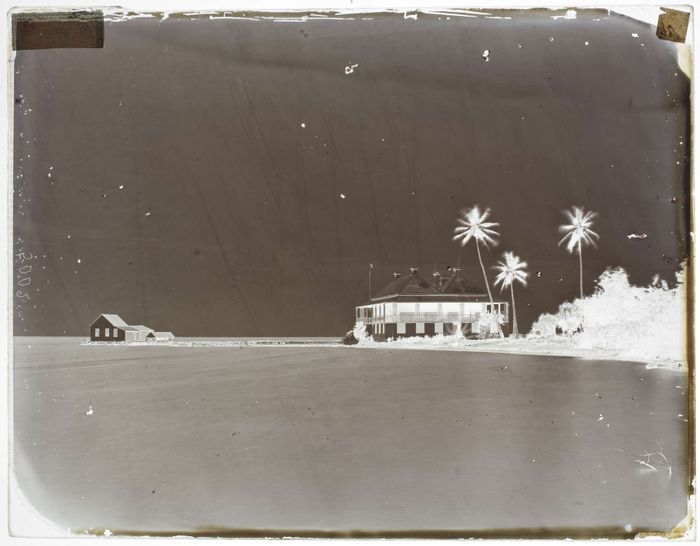
Paul-Émile Miot, a sailor recognized since the 1850s as an excellent photographer, practiced his talents in various parts of the world. 10 years after Viaud, he traveled to Tahiti and the Marquesas Islands during two stays in 1869 and 1870. There he produced numerous portraits and landscapes using collodion glass negatives. His images characterize a naval viewpoint, particularly depicting the coastlines. But Miot also photographed Polynesian society and in particular the royal family. His images bear the hallmark of a seasoned photographer as well as an eye that can readily be called modern, with a strong sense of composition.
Within a decade, these two sets of images provide striking material on a territory that would later be widely photographed.
The approach proposed by the exhibition curators is to rely largely on these negatives to highlight their graphic qualities, while allowing the use of enlargements and positive conversions, but also displaying vintage prints.
Practical info
Full venue programme →